

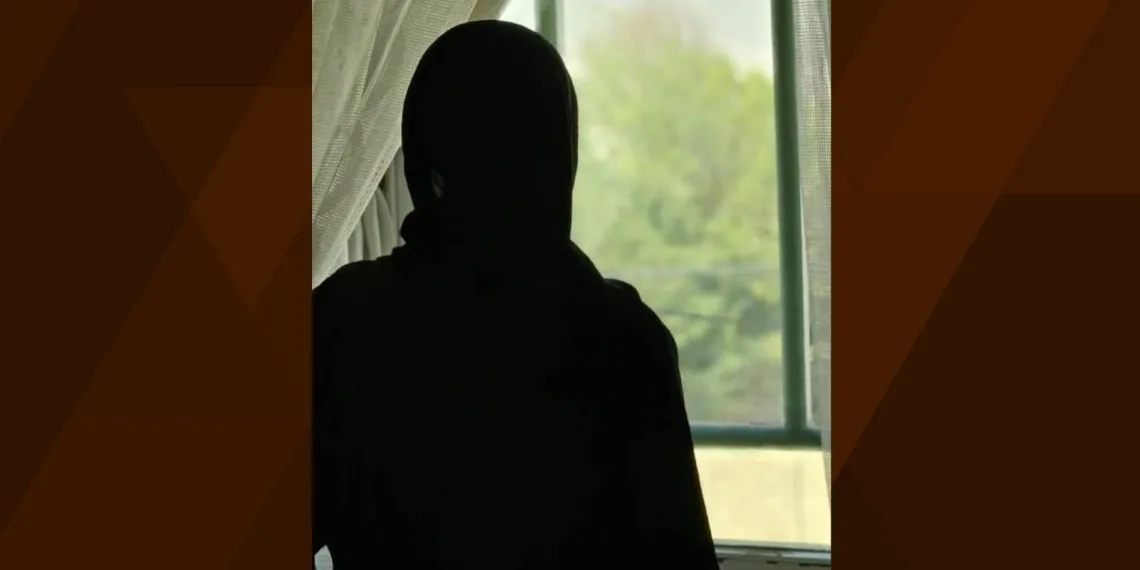
By Raha Azad
Rahima’s teaching salary is so meagre that sometimes she cannot even afford the fare to work, but her job in an Afghan girls’ school means far more to her than her pay packet.
“Because the Taliban’s ambition is to confine us women to our homes, I’d still come and teach even if I got no salary at all,” she told Rukhshana Media.
Giving up work simply because the pay is poor “would mean we’d have surrendered to the situation the Taliban have created”, Rahima added.
Since seizing power in 2021, the Taliban have banned women from most jobs and sought to erase them from public life. Teaching is one of the few professions still open to them.
Many women say the slew of restrictions on their daily lives have left them feeling like prisoners in their own homes. Some are struggling with depression and anxiety.
One women’s rights activist, who asked not to be identified, said that many teachers continue working for next to nothing because “simply being able to leave the house and work matters in itself”.
But she said the lack of employment opportunities for women had created conditions ripe for exploitation.
“Some schools take advantage of the situation and offer low salaries,” she said, adding she had heard of teachers working for as little as 2,000 afghanis (£23.29) a month.
Rukhshana Media spoke to a dozen teachers and principals in schools in the city of Faizabad, provincial capital of the northern province of Badakhshan.
One head teacher said women working in private schools typically earn about 3,000 to 5,000 afghanis ( £34.94 to £58.23) a month while male teachers earn 7,000 afghanis (£81.52).
Before 2021, salaries were broadly the same for men and women. But the Taliban’s restrictions on women’s employment has fuelled competition for jobs in girls’ schools and driven down wages.
The headteacher said she now gets applicants willing to work for no pay at all.
Education is strictly segregated in Afghanistan and women cannot work in boys’ schools.
Salaries in government-run schools are generally between 7,000 (£81.52) and 13,000 afghanis (£151.39) per month for both men and women, but there are far fewer jobs for female teachers due to the Taliban’s closure of girls’ high schools.
ACT OF RESISTANCE
Rahima, 31, who has a university master’s degree in linguistics, went into teaching after losing her job working for organisations conducting surveys.
Her salary is 4000 afghanis (£46.58 GBP) a month, a quarter of what she used to earn, and she has sometimes had to wait months to be paid.
But for Rahima and many like her, simply walking out of the door in the morning feels like an important act of resistance to the Taliban.
Somaya*, 28, a mother-of-three, said the main reason she worked for so little pay was to prevent women being completely erased from society.
Although her monthly salary of 5000 afghanis (£58.23) is a third of what she once earned as a university history lecturer, she said the work she did now was more important.
Sara*, 24, a graduate in Islamic law from Badakhshan University, added that it was unfair that women teachers were paid less than men even when they had the same level of education.
Her salary of 3,000 afghanis (£34.94) a month only covers a small part of her living expenses, but staying at home would plunge her into depression.
“My brother says, ‘Nobody needs your salary. Why put yourself through so much trouble?’ But I go because it means something to me,” she said. “And I enjoy myself more when I am with my pupils.”
Sara teaches nine to 12-year-old girls. Despite the Taliban banning girls from high school and university, some of her students talk about becoming doctors, engineers and journalists.
Their ambitions fill her with joy, but discussions about the future can also be heartbreaking.
Once, she asked 25 students what they wanted to become.
“Only ten replied,” she said. “The others remained silent or said with a bitter laugh, ‘Nothing, because we aren’t allowed to study.’.”
*Note: Names are changed for security reasons.

