

By Zuhal Azad, Raha Azad
Before the Taliban returned to power in 2021, women were a key part of the Afghan media landscape. They presented the nightly television news, went around the country to report, and their voices could be heard on the radio.
Less than five years on, there are few women journalists working in Afghanistan.
Restrictions such as strict dress codes and gender segregation have reduced the presence of skilled women in Afghan media, says Sima Noori, a journalist and human rights activist. As a result, she says, women’s problems grow in silence.
Journalist Ishaq Joya says the absence of women reflects a broader crackdown on media freedoms in Afghanistan.
“Independent media have either shut down or moved their operations abroad. Those remaining inside the country are under pressure and lack the freedom they once had,” he says.
Masoud Jalili*, editor of an online media outlet inside Afghanistan, says the strong presence of women in Afghan newsrooms helped to balance narratives and gave greater visibility to social issues, especially those concerning women.
Today, he says, any coverage of topics that relate to women are subject to censorship.
A new report by the Afghanistan Journalists Centre and the Afghanistan Media Support Organization released on May 3, World Press Freedom Day, highlights intensified repression and continued detention of journalists under Taliban rule.
The Afghanistan Journalists Centre says repression and censorship have expanded over the last year, during which it has recorded at least 127 threats to media workers and 20 arrests.
The Taliban have also revoked the licences of at least 10 organizations supporting media and journalists and have restricted access to information and interfered in how programs are produced and interviews conducted.
The report notes that restrictions on female journalists have intensified, the broadcasting of women’s voices has been officially banned in several provinces, and women journalists’ voices have been censored in Taliban press conferences.
At least 20 journalists and media workers have been detained during this period, four of whom remain in custody.
The Afghanistan Media Support Organization (AMSO) stated that independent media in Afghanistan are experiencing one of their darkest and most difficult periods under Taliban rule.
Reporters without Borders says in its 2026 Press Freedom Index, published this week, that the Taliban’s return sounded the death knell for press freedom, and for the safety of journalists, particularly women journalists. “The media are now required to broadcast information that is controlled by the government as the media landscape is now devoid of pluralism and dissenting voices,” it said, ranking Afghanistan 175th out of 180 countries in its index – the same position as last year.
The lack of female journalists working alongside men means issues that affect and interest women readers are simply not getting covered, even as the Taliban goes about its ruthless destruction of their rights. Indeed, those issues are often censored.
To mark World Press Freedom Day, Rukhshana Media spoke to four women journalists in Afghanistan. Here are their stories:
From newsroom to sewing machine
Maliha*, 29, worked for more than five years in Afghan television and radio; she attended press conferences and reported from the ground on women’s stories.
“When I got into journalism, I felt very good and I really enjoyed the work,” she says. “There were security challenges, but freedom of expression had meaning.”
After the fall of Kabul, the media outlet where she worked closed and she lost her job. Initially, she didn’t dare seek work, but eventually she tried to find a job, only to be turned away, or offered low-paid jobs without benefits.
“For a whole year, I went from one media outlet to another looking for work, but it was useless,” she says .“If several women applied for a position and even one man applied, that man was preferred. Because women are not allowed to attend many events, and many sources are not willing to speak with female journalists.”
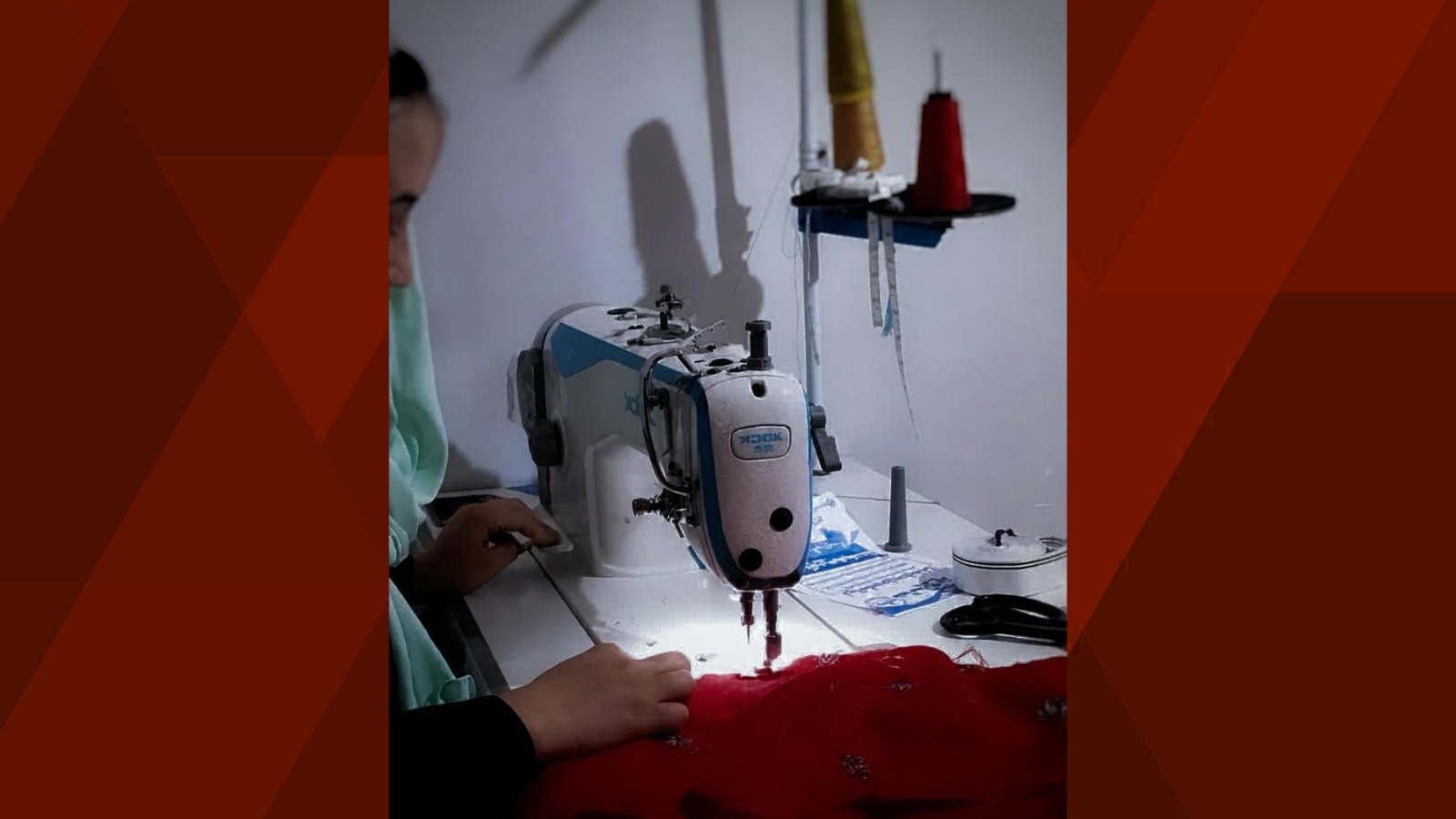
After months of searching, Maliha began work as a seamstress in a garment workshop, swapping her broadcast microphone for a sewing machine. Today, she works in a dark basement, one of around 20 women left behind by work and education.
In exile
Mahbuba*, 31, now lives outside Afghanistan, but for nine years she worked as a journalist there. Until August 2021, she worked for an online media organisation, reporting on women’s issues and social topics.
“I spoke with women, listened to their stories, and tried to reflect their suffering,” she says. “The work of women journalists was valued, and no one was forced to leave because of their gender.”
When her employer shut down and some of her colleagues were detained by the Taliban, she decided to flee Afghanistan for her own safety. She continues media work in exile and now works with a human rights-focused outlet, but finds it hard to watch the silencing of women’s voices in Afghan media from afar.
“Only topics that align with their (the Taliban’s) wishes are published,” she says.
From being banned from radio to forced marriage
Maryam*, 27, studied journalism at Kabul University and became a radio journalist – a job she used to love.
“I walked for 40 minutes every day to get to work. I prepared my programs with enthusiasm and mostly covered issues related to women,” she says.
She was able to continue work for more than two years after the Taliban seized power, but finally in October 2023 her manager told her not to return to work the next day, she believes under pressure from the Taliban.
After losing her job, Maryam was forced into a marriage she didn’t want and she is no longer even allowed to leave the house without her husband’s permission.
“In reality, I had no other option,” she says. “To escape people’s gossip and my family’s pressure, I had to accept marriage.”
Even before the Taliban, women working in media was not considered acceptable in the conservative region of northern Afghanistan where she lives, and her family had opposed it.
“My father and older brother were against me working at the radio, but I was brave enough not to let anyone stop me. I hated staying at home. I never even thought about marriage. I just wanted to work, become a good journalist, be the voice of people—especially women,” she says.
Maryam says she often regrets being born in Afghanistan, but knows such regret changes nothing.
“When I think about my days at the radio, I can hardly hold back my tears. I never imagined my fate would come to this. Today… I am a female journalist in a situation where I can’t even say my own name.”
* pseudonyms given for the safety of the interviewees.

