

By Jawid Maleki
Two weeks ago, a large explosion tore through a school in Kabul, injuring more than 50 children, but the tragedy has attracted remarkably little attention.
Normally, something as horrifying as this would be extensively reported by the media, backed by interviews with witnesses, school staff and victims’ families.
But we still have very few details about what happened at Shama-e Hedayat School on the afternoon of August 17. We do not even know the extent of the children’s injuries.
The lack of media coverage is a stark reflection of just how hard it has become to report in Afghanistan.
Since seizing power five years ago, the Taliban have imposed draconian restrictions on the media, aimed at crushing all criticism and controlling the narrative, particularly on security matters.
The media freedom organisation Reporters Without Borders says the Taliban have turned Afghanistan into a “prison for information”. Its 2026 World Press Freedom Index ranks Afghanistan 175 out of 180 countries.
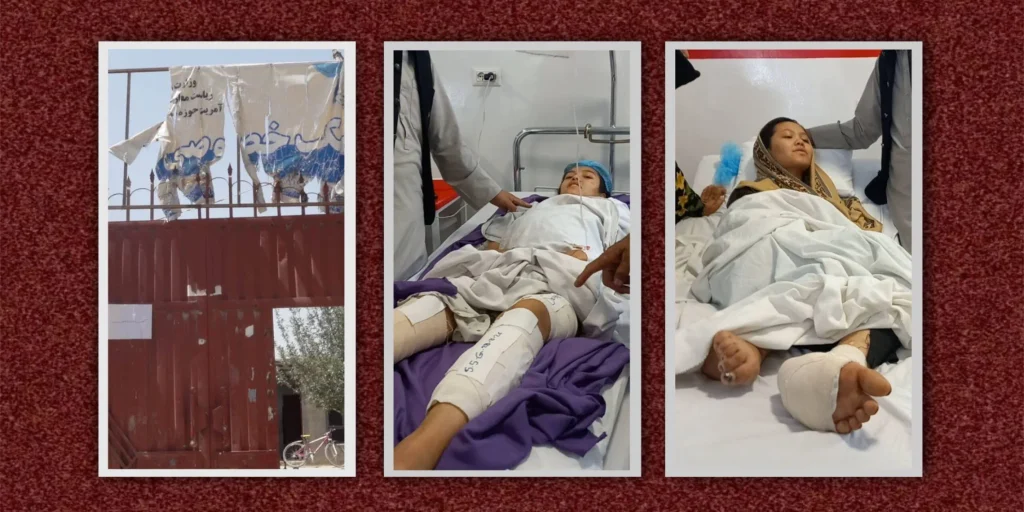
After the explosion at Shama-e Hedayat School, our reporters conducted dozens of interviews.
Eyewitnesses told them the blast was caused by a hand grenade hurled into the school. Several reported seeing two men on a motorbike throw the grenade.
Others described children lying in the school courtyard screaming in pain, and girls with blood-stained white headscarves.
But the Taliban said there was no attack.
Media outlets close to the Taliban, or operating under Taliban restrictions, said the blast was an accident caused by an old item of unexploded ordnance that a student had brought into school.
However, Rukhshana Media reporters said the Taliban blocked off the area around the school and prevented anyone accessing information that would help verify what happened.
They said the school head, several teachers and a doctor who had provided first aid were detained, and that school staff and victims’ families appeared under pressure to keep quiet.
MEDIA TYRANNY
The Taliban’s hostility towards a free media is both tactical and ideological. Tactically, they hope to cover up past crimes and current failures. They also know they would never win public acceptance in an environment where information was allowed to circulate freely.
Ideologically, the Taliban do not believe in freedom of expression. During their first period in power in the late 1990s, they established absolute media tyranny. Over the past five years, they have steadily moved in the same direction.
Afghanistan used to boast a vibrant media scene, but the Taliban – who tolerate the media only in so far as it serves their propaganda aims – have now gained almost complete control over the flow of information.
They have achieved this through the closure of media outlets, censorship, intimidation, the arrest and torture of journalists, heavy restrictions on female journalists and widespread bans on video reporting.
The one remaining hope for independent reporting from inside Afghanistan lies with exiled media outlets which gather information through interviews with ordinary people, mostly conducted by journalists working in secret on the ground.
Yet the Taliban are now trying to choke off this key channel.
Some witnesses we spoke to immediately after the school blast later changed their accounts or contacted us to ask us not to publish their comments.
They said they were now afraid of repercussions, even though we had guaranteed them anonymity.
One Rukhshana Media journalist said several sources had initially reported seeing two motorcyclists throw an explosive device into the school.
But when the journalist returned to the area five days later, the atmosphere had completely changed. People were very cautious. Most repeated the account published by Taliban-controlled media, including some who had previously reported seeing the motorcyclists.
“Fear and uncertainty could be seen in the faces and eyes of some of them,” the journalist said.
One well informed source told our reporter to stop working on the story because having journalists approach people for information was putting school staff and pupils’ families at risk.
Another journalist who visited the blast scene on August 22 could not find anyone who would talk.
SELF-CENSORSHIP
We have never seen a tragedy as serious as this remain shrouded in such silence.
Explosions at schools are sadly not new in Afghanistan. But in the past, there were always many witnesses willing to share information.
Our journalists have also noticed increasing self-censorship among ordinary people while covering other stories on issues such as the harassment and detention of women for alleged violations of Taliban rules.
Victims – and their families – say they have been pressured not to talk to the media about what happened to them. In some cases, women freed from detention say the Taliban have forbidden them from making public statements as a condition of their release.
The Taliban are not only making it harder for independent journalists to find sources for their reporting, but are also trying to sever their links with media outside the country.
Last month, the Afghanistan Media Support Organization, a non-profit based in Germany, said the Taliban had reportedly asked members of the media to identify journalists who cooperate with outlets in exile.
The Taliban have always had their hands around the media’s throat. But their grip is now tightening once again as they try to strangle independent reporting.

