

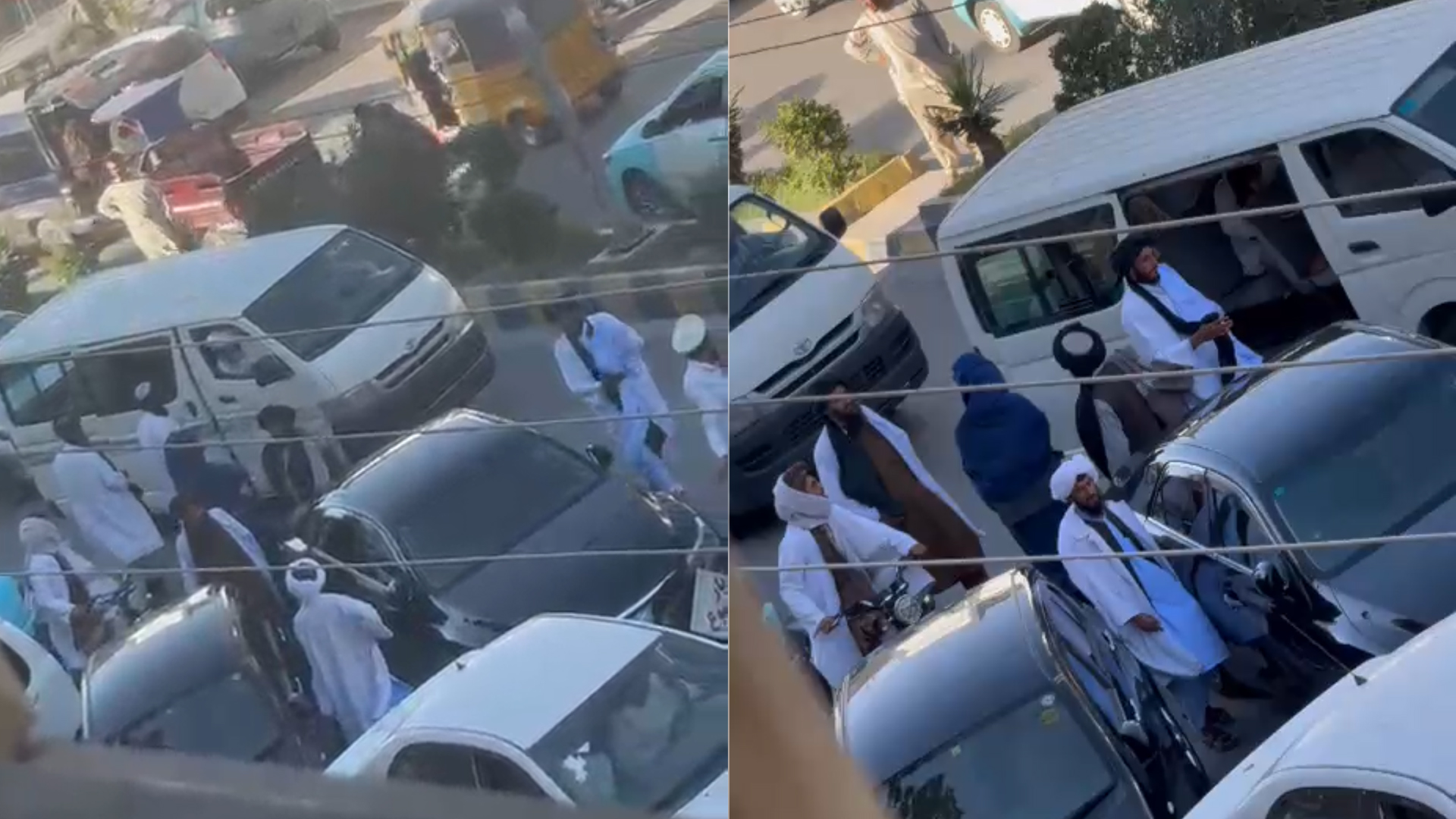
Taliban authorities in the northwestern Afghan city of Herat have detained dozens of women for failing to comply with the country’s draconian dress codes in recent days, in an intensifying crackdown that has sparked condemnation from the United Nations.
Witnesses in three different locations said they saw women being detained by the feared morality police on Saturday and Sunday for failing to wear a (niqab, or face veil, or the all-covering burqa. The United Nations Assistance Mission in Afghanistan (UNAMA) put the number at 30.
One video shared with Rukhshana Media showed several young women and girls being arrested in a shopping centre at Chawk-e Golha in central Herat. A witness who spoke on condition of anonymity said Taliban police detained around 12 women and girls in the area and took them away in several vans.
A witness who saw young women being taken away in a separate part of the city reported that the Taliban used violence.
The arrests followed a meeting on Friday between Noor Ahmad Islamjar, the Taliban-appointed governor of Herat, and the provincial head of the Taliban’s Ministry for the Propagation of Virtue and Prevention of Vice, which oversees the country’s new morality law and police.
Islamjar is a prominent Taliban official known for taking particularly hardline positions. It was during that meeting that the decision was made to start detaining women for violating the dress rules, according to three people who were present and who spoke to Rukhshana on condition of anonymity.
The local Taliban administration announced that a team of morality police, accompanied by eight female and eight male police officers, would patrol the city looking for offenders.
The head of UNAMA, Georgette Gagnon, cited the detentions in a briefing to the Security Council on Monday as an example of the “severe and growing restrictions” imposed on women and girls under Taliban rule. In a post on X, the organization said the detentions raised “serious human rights concerns.”
Even before the latest detentions, restrictions on women’s dress were enforced particularly strictly across the province of Herat.
In November 2025, Médecins Sans Frontières (MSF) reported that the Taliban authorities had instructed female patients, caregivers, and female staff members to wear a burqa in order to enter public healthcare facilities in Herat city.
Women in Herat have traditionally favoured wearing large chadors similar to those commonly worn by women in neighbouring Iran, rather than the burqa.
Residents of the province wrote to the Taliban governor at the weekend to protest the crackdown. But a statement issued by the Taliban’s Department of Hajj and Religious Affairs in Herat declared that “women and girls who do not observe Islamic hijab will be arrested and imprisoned by morality police officers, and no one has the right to complain or object.”

