

By Ghazaal Mohammadi
First they were told they must cover their heads, then that even their faces must be concealed. Now female YouTube performers in Afghanistan’s Herat province have been banned altogether, robbing women of one of the few remaining means of earning an income and rendering them almost entirely invisible.
Representatives of the Taliban in Herat met with YouTube channel managers on March 31 and told them women were banned from appearing in their shows, according to a well-informed source who spoke on condition of anonymity.
They said a woman’s voice should not be heard by anyone who wasn’t a relative, warning of serious consequences for breaking the ban, according to the source.
The Taliban have not officially commented on the decision, which Rukhshana Media has learned has led to at least eight women losing their jobs and being confined to their homes.
Susan*,one of the women, told Rukhshana she’d dreamed of acting since she was a child.
She signed up to work for a comedy channel in 2021, as the Taliban was tightening its grip and increasing its restrictions on women.
“The more obstacles there were, the more I moved toward them,” she says. “I wanted to show the world that women in Afghanistan are not weak and can keep going, whatever the circumstances.”
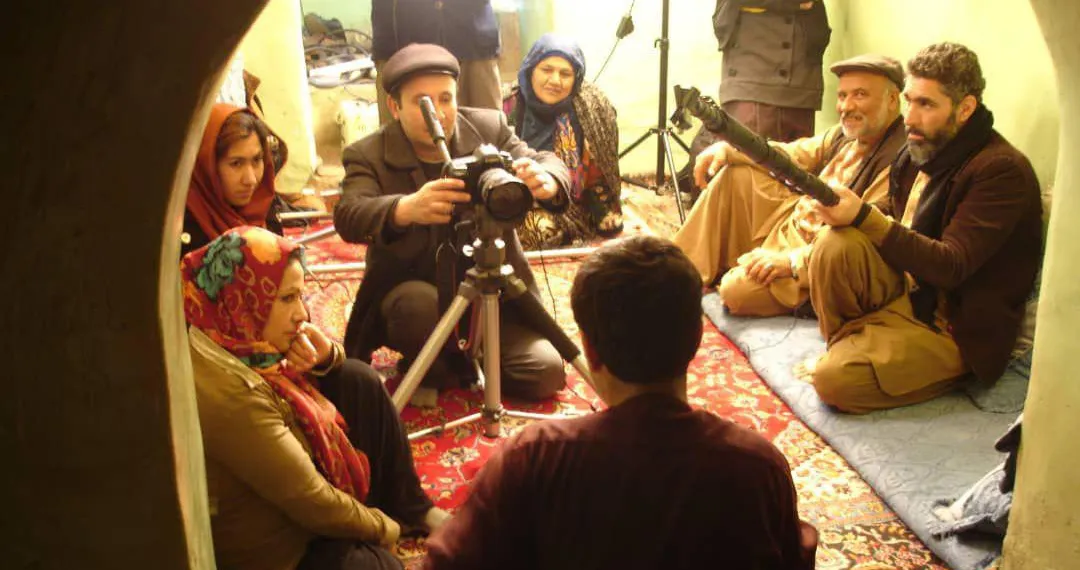
Together with a group of actors, she recorded weekly comedy shows for a YouTube channel with hundreds of thousands of followers, focusing on family problems and everyday social issues.
Despite negative comments and hostile looks from neighbours in her deeply conservative home town, she was determined to keep going. Even when women actors were required to conceal their faces during performances in 2022, she was determined to continue acting, putting up with the discomfort of a mask after they were made compulsory – a move human rights activists said was aimed at humiliating and erasing women.
Now, she’s been forced to stop.
“Our biggest problem is that we are women,” she says. “[The Taliban say] women should not live freely, should not work freely, should not travel freely — and now women should not act in YouTube shows. If this continues, women will lose interest in all work.”
The Herat move is just the latest by the Taliban’s Ministry for the Promotion of Virtue and Prevention of Vice. Shortly after the Taliban returned to power, it ordered national broadcasters to stop showing television series featuring women. Then women were banned from studying in arts subjects at universities.
More recently, the group has banned the broadcasting of images of “living beings” through the media — a measure they had also implemented during their first period of rule before 2001.
Now, some YouTube channels in Herat are using men to play women’s roles while women artists have either left the country or been confined to their homes. Fatema Hosseini, a well-known Herat theatre actress, announced in a video in April that she has stopped working.
“I no longer work. Maybe men can work, but women are no longer allowed,” she said, criticising those who she said had reported women actors to the authorities.
Maryam* went into acting four years ago. She sees her craft as a way not just to play a role but to express realities rarely spoken of in society. Still, fear of public judgment always accompanied her performances.
“I always feel fear and anxiety — that someone will stop me or criticise me. If I play a negative role, I worry about what will happen after it is broadcast,” she says. “My goal is to deliver a message, but others see it differently.”
Family opposition, social challenges, and the restrictions imposed by the Taliban on women are obstacles that Maryam is struggling with. She says these limitations have gradually narrowed the space for her and other women actors to work.
“At the moment, no woman is free to work based on her interests,” she says.
Note: Names marked with an asterisk are pseudonyms used for safety, and some details have been omitted

