

By: Somaya Mandgar
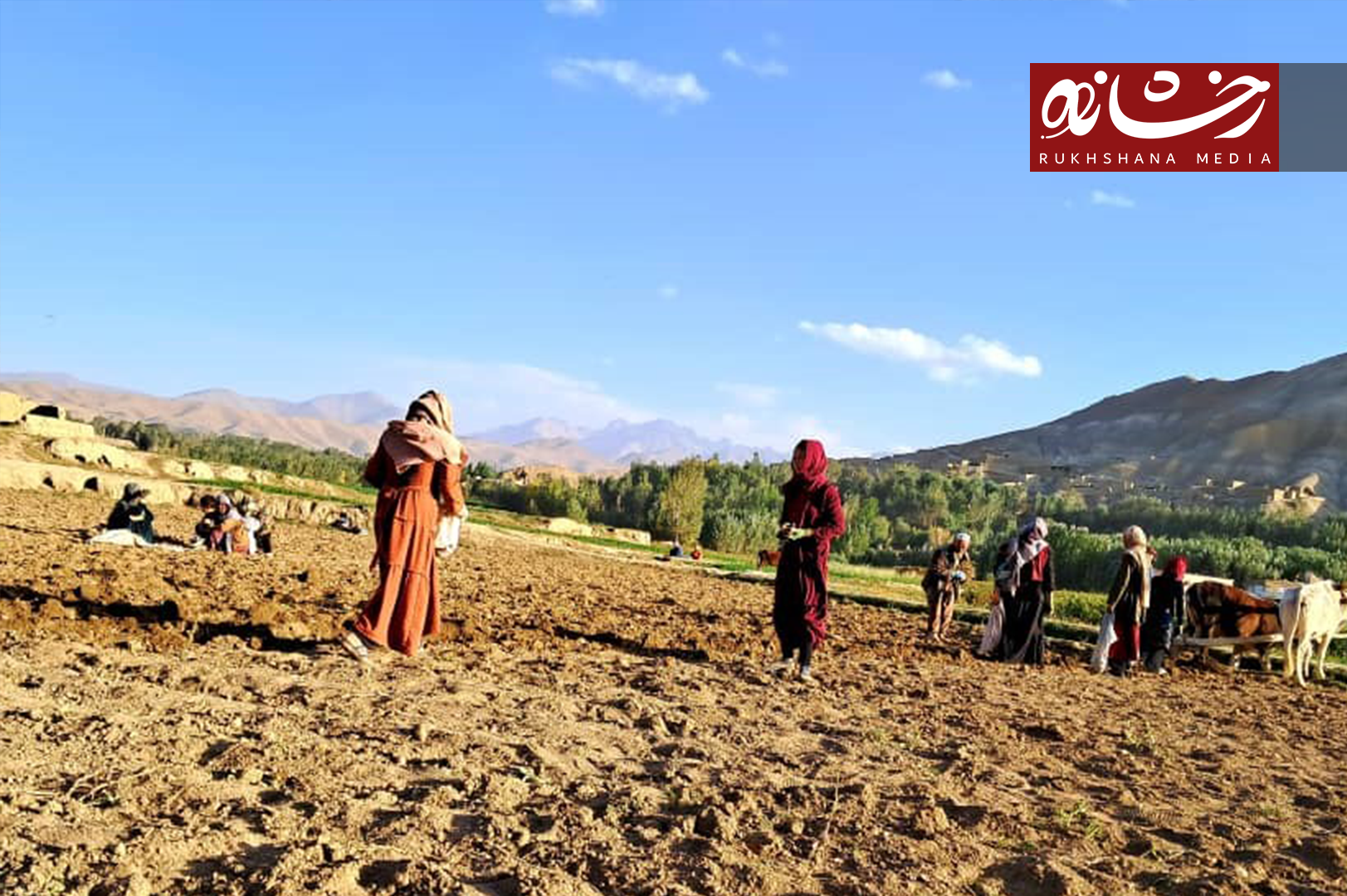
As potato harvesting season is underway, Sabira has been going to the fields to pick the crop every day. She begins work at 5am in the morning and returns home at 6pm to the cave where she lives with her seven children.
For her 13 hours of work, she receives 150 Afghanis – or less than two dollars. Sabira, 40, finds the days extremely tough but she doesn’t have much choice. With the climbing unemployment rate in the province, and very few paying jobs, Sabira takes whatever work she can.
The high number of women and children working on the potato harvest is visibly evident. But the women we spoke to for this report say the wage they receive is barely enough to get them food for that day alone.
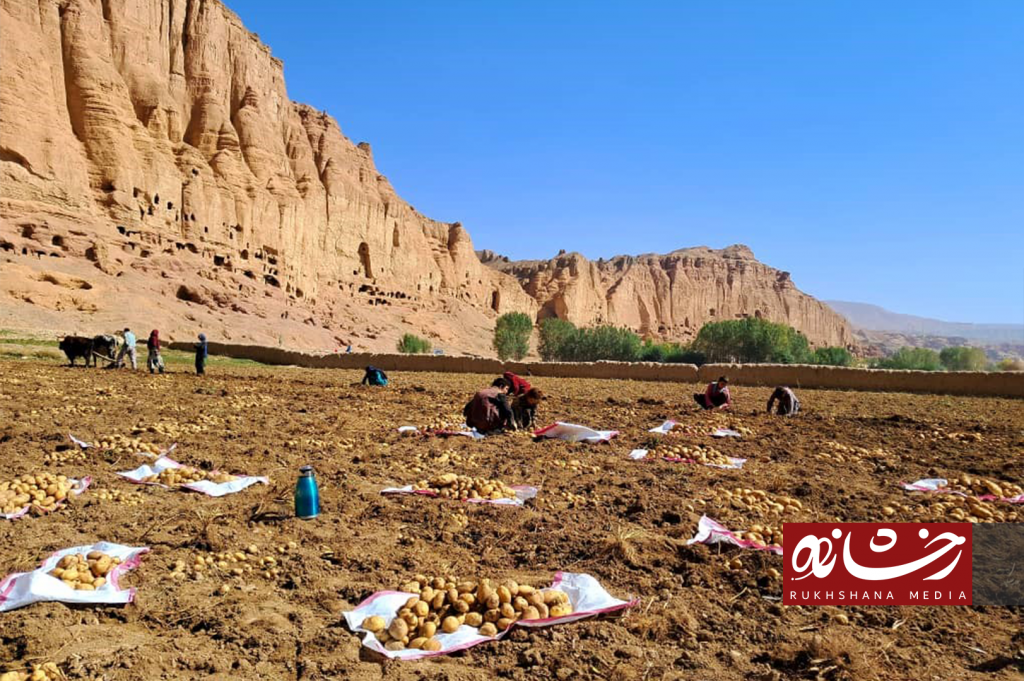
Bamyan potatoes are popularly called “yellow gold” and have a good reputation throughout Afghanistan. The province is one of the largest producers of potatoes in the country, with past statistics showing farmers harvested an average about 300,000 tons of the crop in a single year.
The potato pickers who spoke with Rukhshana Media were mostly cave dwellers or from extremely poor margins of Bamyan. They said they had to accept the conditions and low wages because it’s very difficult to find paying work in the province.
Sabira says her employer provides some basic food to workers in the day, but it’s also a paltry amount.
“In the morning, they bring bread and tea, and in the evening, they cook potatoes, which is very little,” she says.
The work often involves heavy-lifting and extreme exertion, which Sabira says feels like exploitation.
“I am tired and my back is very painful. It hurts all the time,” she says.
According to Sabira, after collecting potatoes from three plots of land, she received one day’s salary from her employer with a lot of difficulty.
Sabira says that she works under such conditions out of necessity. She is the only parent who is earning money – she has not heard from her husband for over a year after he disappeared with a mental illness.
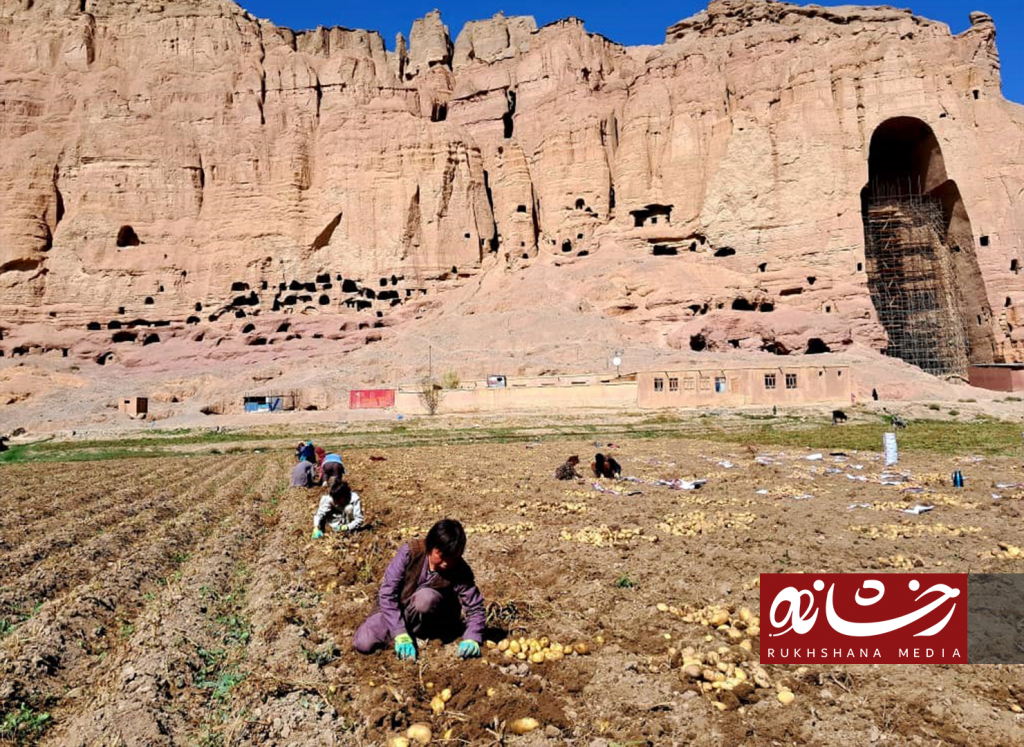
Most Bamyan residents are engaged in some form of agriculture and livestock. After the collapse of the government and the Taliban took control in August 2021, the economic pressure on many people has worsened.
But Sabira says she doesn’t care who is in charge, as long as she is able to get the things she needs.
“It does not matter who is the ruler, the only important for me is to be able to afford the things I need,” she says.
But she is angry at the Talib forces who she says threatened her husband and caused him to have a breakdown.
“When the Taliban invaded Bamyan, my husband was a baker in Qarghanatoo area,” she said. “One of the Taliban forces put a knife to my husband’s throat and tried to kill him, but then another Talib said, if you kill him who will make bread for us? That was when my husband’s mental sickness started.”
Despite the extreme poverty, Sabira says she does not allow her children to work as they would miss school. Education is a priority for her. She is upset that one of her daughters cannot go to school because of the Taliban’s restrictions.
“If I didn’t care about school, I could make one of them work as a shepherd or a bakery apprentice to help support the family,” she says. “But if I remove them from school, their futures will be ruined.”
Rahima, 60, sits on a damp floor collecting potatoes. She has been working already for more than 12 hours. Her wiry, thin frame stands out as she digs the potatoes out of the ground. She says this is the first year that she has started doing this work out of desperation for more income. She works even when she’s sick.
“You see, there are more people in the field than potatoes,” Rahima says, referring to the high unemployment in Bamyan. Around her, there are about 50 other women and children digging in the soil to uproot the crop.
Rahima lives in a family of six people. And despite one of her children working in a Bamyan hotel, they find they have not been able to make ends meet.
For Golbakht, 45, the impending winter means the need for more money and food is high. She has been harvesting potatoes for a meagre salary for many years, and if she had land, she would have grown them herself. She says this year, the outlook is looking particularly bleak. She works every day and never seems to be able to make enough income.
“What should we eat in the winter?” she asks.
In stark contrast to how badly the drop income has affected her, she compares it with how much she can afford now. In past years, Golbakht says a day’s work could buy her 70 kilograms of potatoes, but now, it is only enough to buy 14 kilograms.
Unlike other farmers, Golbakht’s boss does not provide bread to his workers, so they have to bring their own from home.
At the same farm, there is another mother who came with her two children for collecting potatoes. The mother and her children are rummaging through the soil. When asked whether her children will also receive pay, she replies “No!”
It’s a deeply troubling situation for the workers. But the economic situation is also having an impact on the farmers. Despite potatoes being an extremely popular dish in the province and one of the most important agricultural crops, farmers say they are not in a position to pay more. According to some, the product is now being sold at much lower prices and for therefore they cannot afford to pay their workers more. Despite months of work in cultivating the crop, they say they will not make much profit themselves.

