

By Zahra Joya
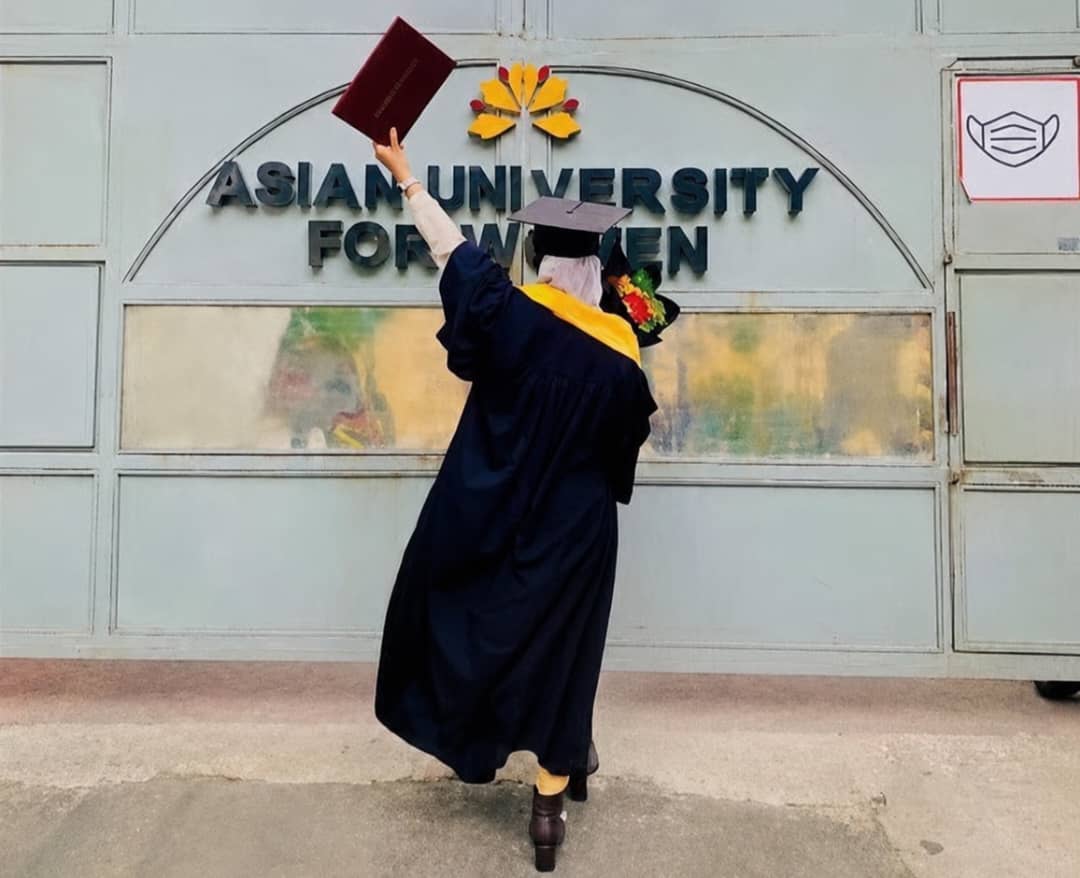
Like many prospective graduates, Narges Hussain Zada is spending her summer frantically filling in application forms as she looks for her next opportunity. She’s proud of all that she’s achieved in the last four years and eager to continue her studies.
But applying for post-graduate courses at universities around the world is not just about that. It’s also her only hope of staying out of her native Afghanistan where, as a woman, the degree that she’s worked so hard for would be useless. Back home, she would be barred from most education and work opportunities and confined to her family’s home.
Yet at a time when women like Narges really need opportunities, they are being snatched away. Many Western countries are closing their doors to Afghans, under political pressure to reduce immigration by refusing entry to anyone who might try to stay beyond the term of a student visa. Some of those who managed to escape the Taliban’s brutal grip in the five years since they returned to power have found that staying out has become just as hard as getting out was.
“I feel like I’m standing in the middle of a bridge,” says Hussain Zada, who will graduate next month. “Behind me is a country where I can’t build a future. Ahead of me are opportunities that keep getting further away.”
Narges had just finished school in Afghanistan when the Taliban returned to power five years ago. Almost overnight, everything changed. She learned that she’d won a place to study journalism at Kabul University, one of her preferred choices, but she knew she would never be able to attend. “They robbed me of the joy of my own success,” she says quietly.
A Facebook post from the prestigious Asian University for Women (AUW) offering scholarships to Afghan women changed everything. Narges applied immediately, completing her entrance exam at an internet café in Kabul because of poor connectivity at home and later doing an online interview with staff at the AUW, which is based in Bangladesh and was set up to provide high-level education for Asian women.
Afghan women have been studying at AUW since 2010, but over the last few years the university has become a true lifeline. Days before the Taliban took power, AUW helped evacuate 148 Afghan students out of Kabul to the United States where they secured scholarships. It has received applications from more than 35,000 Afghan women and since February 2022, nearly 900 Afghan students have enrolled.
Nargis studied Politics, Philosophy and Economics while also pursuing a minor in public health.
When she told her parents she had won a place, her mother worried. But her father was encouraging and both believed her education was more important that what people in their community thought.
“This is not how I imagined you would go to university, but it is the best option available right now. You should go,” he told her.
Narges’s experience contrasts starkly with that of her younger sister, who was in seventh grade when the Taliban returned to power.
She should be graduating from high school this year; instead, she remains at home.
“As proud as I am of what I’ve achieved, it breaks my heart to think about her,” says Narges.
– A refuge –
Afghan students were the second largest country cohort at the AUW last year after Bangladeshi students, and the university says it wants to continue to provide access for young Afghan women despite the challenges – not least of which is the fact that Afghan girls are now not attending secondary school.
Conflict in Iran and hostilities between Afghanistan and its neighbour Pakistan have also disrupted travel for Afghan students.
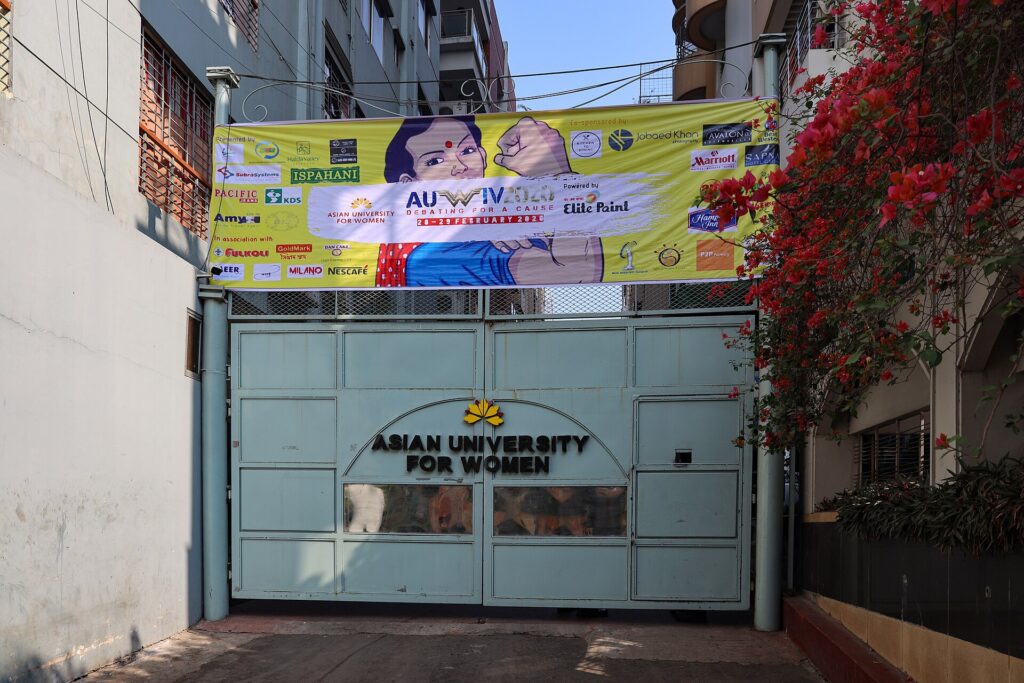
Narges’s own journey to Chittagong, the coastal city in Bangladesh where AUW is based, was an ordeal.
There were 10 Afghan women travelling there from Kabul airport, but the university had advised them to keep a low profile and not to travel together. Nevertheless, Narges says, the Taliban knew who they were.
“We denied everything,” she recalls. “We said we weren’t together. We said we weren’t travelling for education. But they kept saying,’‘we know’.”
For hours, the students sat under the watch of armed Taliban officials, uncertain whether they would be allowed to board their flight. The authorities attempted to confiscate their passports. At one point, they told the students there was no point resisting because they would miss their flight anyway.
“I genuinely thought that was it,” she says. “I thought they were going to stop us from leaving.”
Eventually, after what she believes was intervention by the university, they were allowed to board their flight.
When she finally landed in Bangladesh, Narges says she felt something she had not experienced for months: relief. Finally, after months of fear, she was able to relax, and she slept the entire way to the campus.
Four and a half years later, she reflects on her time there with a mix of happiness and trepidation. The AUW has been a refuge, but the future looks uncertain, and much as she’d love to go home, she knows there’s nothing there for her.
She’d begun preparing applications to universities in Britain when she learned of a new block on student visas for Afghan applicants, news she describes as “devastating.”
“There’s already so few opportunities available to us,” she says. “When another door closes, it affects everything.”

